Monday, December 25, 2006

Bonnes Fêtes!

Warmest holiday wishes to all...and a tour through the 'hood last eve.

I've a few blog posts to catch up with...but I did well on my exams. woohoo!

À bientôt!
L


The Lights of Aix en Provence


Monday, November 27, 2006

The Olive Pickers

As a child of the sixties, the only olive I knew was black and salty, tough and hollow…if we were lucky - that is to say, lucky if they were hollow. (I wasn’t much into those pits.) There was a long-standing pattern of olives being stolen from my plate at dinner when a particular cousin who, several years older than I, took great pleasure in this little joke. (I should have been happy for those olives to be nipped!) Aside from being rather protective of the food on my plate (something that has stayed with me to this day), I was not the olive lover in my family. That role belonged to my sister. With a pitted olive on each finger, she would slowly nibble them off, savoring them as if there was something really special going on that I simply didn’t understand. Further proof of her love of olives was evidenced by the fact that she would regularly request those fat, sour green olives stuffed with pimento. Ahhh…such was life in the sixties with two little girls who were training their very different palates.
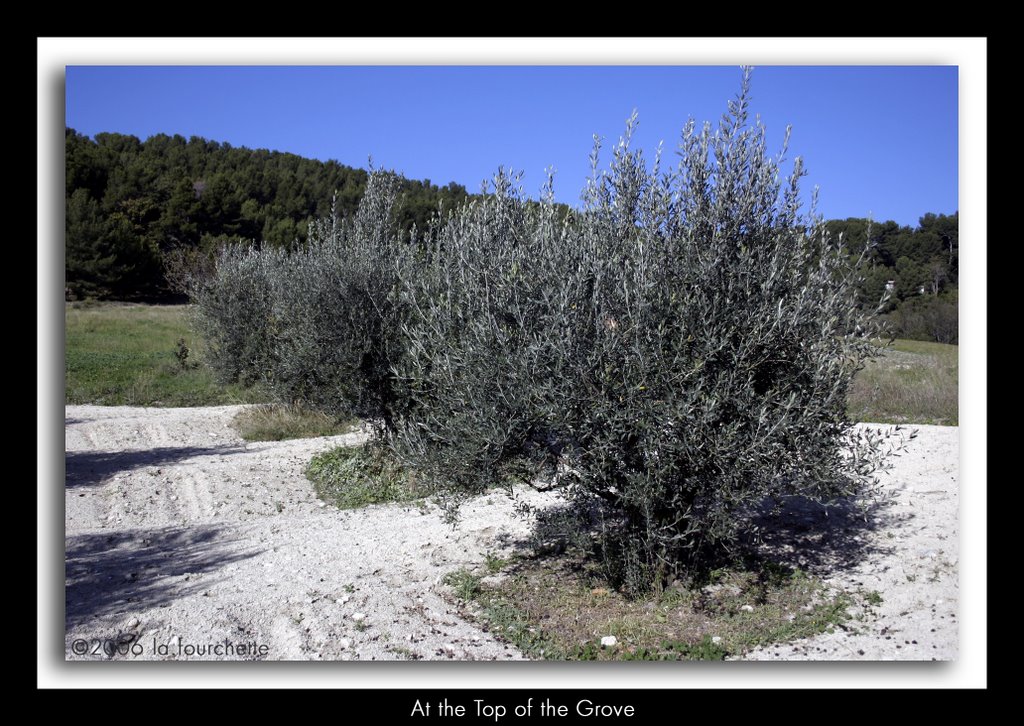
Then one year for Christmas, my very frugal (and very creative) parents put a can of California Graber olives in my sister’s stocking. It was a new product and the can opened to show plump globes of mottled green and brown – their pits still tucked in their middles – swimming in a clear liquid instead of the inky stuff that would be drained off of the olives we had known until then.

My sister bravely tucked right into the gift and was kind enough to share – probably feeling confident that the can would remain untouched by me as I had mild gag reactions to green olives. But I must have been feeling adventurous and pulled one from the freshly opened can. The tender flesh released an actual flavor that deserved attention. There was something different going on here: a noticeable richness, a soft green woody-earthy taste that immediately had me asking for more. I can’t remember just how generous my sister was in that particular moment, but I do give her credit for introducing me to something new in the olive realm. Those cans of olives continued to show up in her stockings at Christmas and our tables at holiday time.

Fast forward to many years later and my first trip to Provence: It was during that first "wander’" through the marché in the early morning light along cours Saleya in Nice that I was introduced to the pungent aroma of briny olives that are a staple in Provence. The scent that permeated the air as the vendors dipped into big tubs of olives with wooden ladles to offer samples to passers-by was intoxicating to me. The display from vendor to vendor was a visual feast: small, large, shiny, or not-so-much...in earthy blacks, browns, greens...some mixed with herbs, others mixed with onions and peppers, and preserved in a bath of their own oil. This was a new world and a stash of fresh olives from the marché made it back with me from every trip.


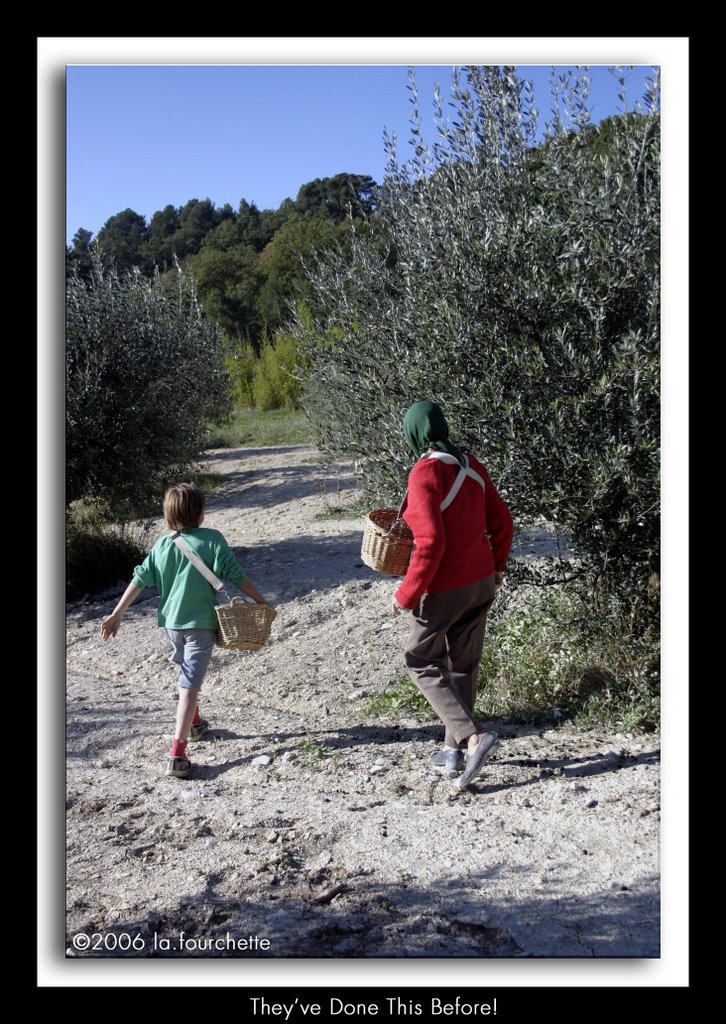
This year, my affair with olives was taken to an even deeper level. I was invited by a new friend to participate in the annual olive harvest of the trees on her property in the countryside just outside of Aix.


Our long hot summer took its toll on the olives this year. With little rain and relentless heat, there were fewer olives on the trees than usual. With a week or so of a Mistral that blew through Aix with a force that I am still getting used to, it was decided that it would be best to go forward with the harvest, even though it was earlier than usual.

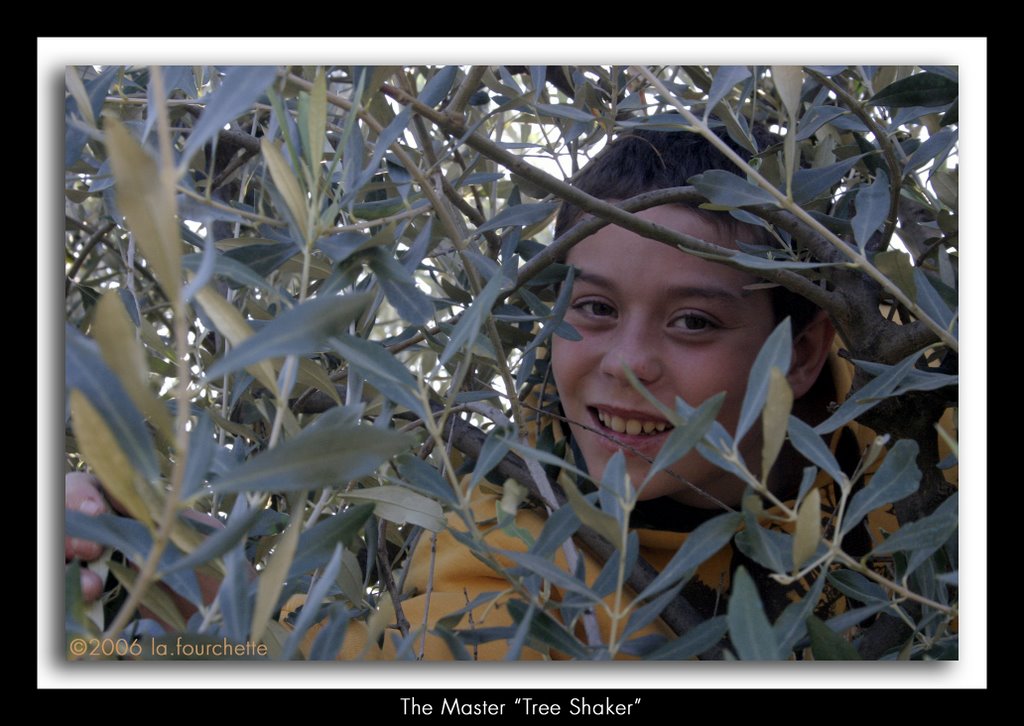
There is a regular group that shows up for this annual event made up of friends, neighbors, grown children and their spouses and younger children (one of whom turned out to be a very good “tree shaker”!)

Any and all newcomers are warmly welcomed. Under a “Will Work for Food” contract, they start in the morning with a picnic lunch offered by the “mother” of the trees (and owner of the bastide) at mid-day. After the day is finished and the work completed, there is a lively lasagne dinner for the hungry and friendly crew.


When I arrived, the work had begun.

People were working below and around the perimeter of the trees. Some were chatting quietly…others were working in silence. There was some sort of collaboration between the people and the trees. Olives that had been blown off the tree were collected from the ground before the nets were spread and the picking began from the olives suspended in the branches.

Some pickers dropped the olives to the net while others worked filling bags or baskets. Larger crates began to be filled with all of the olives collected in preparation for the trip to the olive mill (cooperative) where the owner will retrieve bottles of olive oil when the press is finished. I heard someone say that it should provide enough to last through the year. Mmmmm!

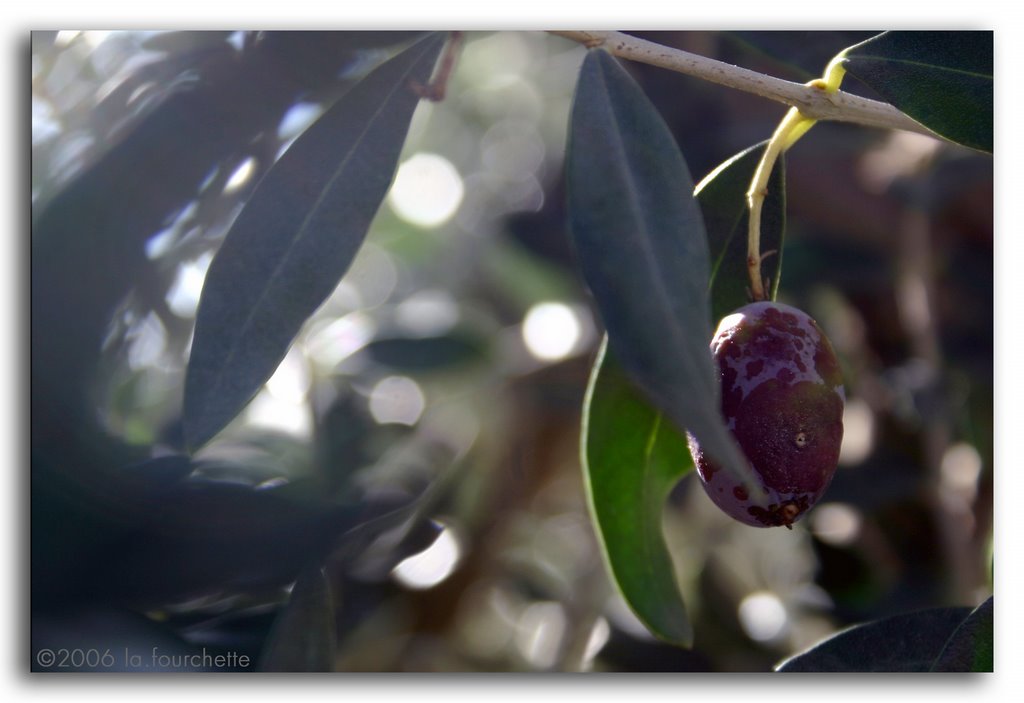
It was lovely for me to catch up with people I’ve not seen since before the summer began. As I worked, I overheard many French conversations between people catching up on each other and mutual acquaintances not present. One woman remarked on how lovely the olives looked as she plucked them from their suspended state within the leaves. “…comme marbre!” (like marble) she said, and I was struck by this lovely woman's appreciation for the simple beauty of these olives. I would have to agree.

All conversations were taking place as a slow-motion dance was performed around the olive trees. It was in this manner that the group moved through the grove. Against a brilliant Provençal blue-lavender sky on a mild October day, the task was happily taken on by all participants. It was my first olive “récolte” (harvest) and I would hope that it is the first of many! (Next time, I’m staying for the lasagne!)

(Merci, Sheila and Margaux, pour cette occasion comme ça! C'etait un plaisir!)

`a la prochaine fois!
L


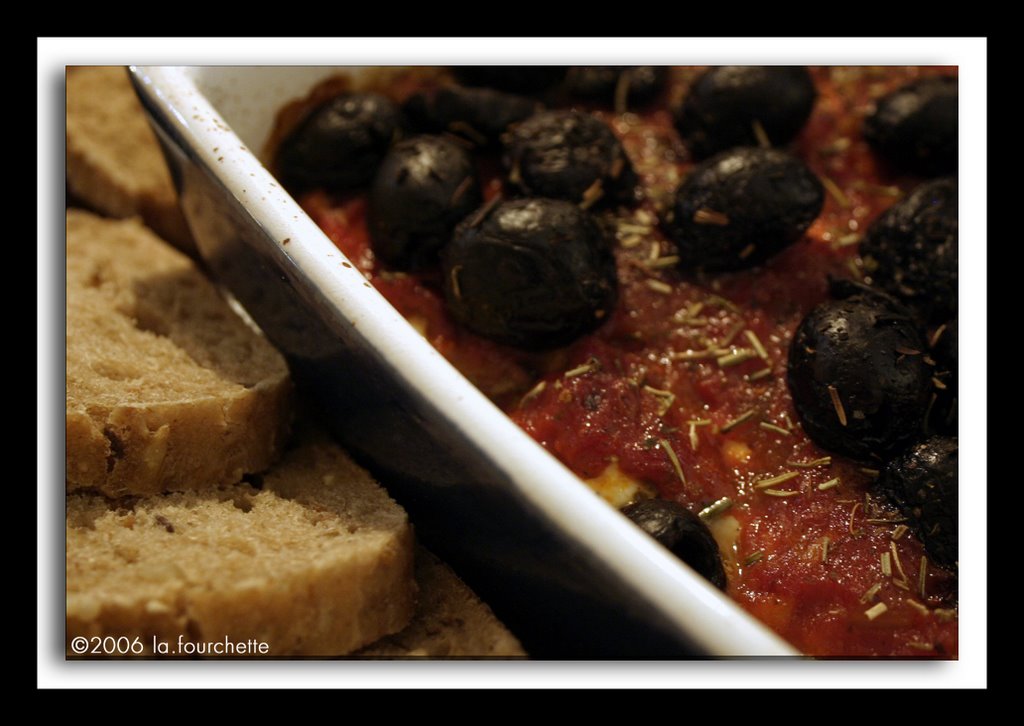
And to put those olives to good use:

Anne’s Goat Cheese Gratin

(adapted from At Home in Provence by Patricia Wells)

6 shallow 6-inch (15 cm) round gratin dishes or 1 10.5 inch (27 inch) round baking dish

About 10 ounces (300g) soft goat cheese or a mix of rindless soft goat and cow or sheep’s milk cheese, cubed or crumbled.

2 Tablespoons of your favorite fresh herbs, minced (or dried herbes de provence)

1.5 to 2 cups (33 to 50 cl) your favorite homeade Tomato Sauce at room temperature

About 24 best quality olives, pitted

1. Preheat the broiler
2. Scatter the cheese on the bottom of the baking dish or dishes. Sprinkle with half of the herbs. Sppon on just enough tomato sauce to evenly coat the cheese. Sprinkle with olives and the remaining herbs.
3. Place the baking dish or dishes under the broiler about 3 inches (8 cm) from the heat. Broil until the cheese is melted and fragrant, and the tomato sauce is sizzling, 2 to 3 minutes…although mine always take extra time…watch them closely.

Bon Appetit!

Saturday, November 04, 2006

Chestnuts Roasting on an Open Fire...

Aside from the romantic aspect of that old Christmas song and the images it would create in my head, I could just never quite relate to the part about what was happening to those chestnuts or what you did with them once they were roasted. Just not a whole lot of chestnut-roasting going on back on the beach.


I now live in “chestnut roasting – ville”. As we slip into the “real” autumn (actually, we kind of “slammed” into it yesterday with a Mistral dropping our temps by several degrees and temps remaining in the low single digits overnight even after the winds had passed...and that is “low single digits” in centigrade, folks!) there are many signs that make the entry into autumn official. Among them is the appearance of the fellow selling roasted chestnuts. Sending a sweet smoky fragrance ahead of themselves, I became aware of their presence meters before the yellow stand came into view. A few steps later, I discovered that the fellow who carries gigantic "bouquets" of brightly colored balloons through the marchés to sell during the summer has now donned his jacket (it will soon be a down jacket and ski cap!) as he fires up his roaster to sell newsprint paper cones filled with the little smoky treasures.


I “met” this fellow during my first autumn in Aix while sipping a café under the green awning across from his stand. I was busy making a list of pros and cons for staying in Aix while waiting for someone to arrive for a meeting. Thinking I was keeping to myself with my list project, I brainstormed and weighed my options: the new opportunity of a fabulous apartment in Aix that had just become a factor in my decision-making versus a little tiny apartment in Nice just steps from the Mediterranean Sea with a sliver of a view of that same sea from the balcony off the main room. Lost in reflection before the meeting began, I would return to the moment occasionally to check my watch for how much time I had to continue...and apparently the chestnut roaster (it must have been a slow day) was watching me. From his stand directly across from the café I sat in front of, he called to me and made a comment about how it looked like I might have been stood up by the “man” I was waiting for. (These French: so romantic!) With a friendly smile, I assured him I had not been snubbed and shortly after that, the person I was to meet showed up. (In fact, this was the person who had made the apartment contact for me and was taking me in for one more showing before my decision was to be made.) An ending was created to whatever story he had woven and with a nod, he returned to tending to his roast.


I always kind of giggle at that first encounter. That “snapshot” of time has been an anchor of sorts in my memory when the roasting stand appears. I think back to that brief exchange and the “date with destiny” that I was making that day. The decision to stay in Aix was a very good one (even though I gave up a view of the sea!) And when the “marron grillés” appear each year, it is an opportunity for me to send gratitude to the Universe for how the adventure has unfolded.

As for the actual roasted chestnuts: I look forward to them being a part of the cold weather survival kit. Hot off the grill, they are served in paper cones and the sweet smoky fragrance that permeates the air of the marché is the first tease from this delicious treat. That first “sniff” is followed by the sight of variegated brown charred chestnuts toasting up on the fire and then the pleasant sensation of my cold hand wrapping around the moist warmth of the paper cone filled with steamy chestnuts. There is such pleasure in an experience that tickles all of my senses.


If you do not have ready access to roasted chestnuts, you can come by chestnuts for cooking this recipe at local markets (or Williams Sonoma – which is where I used to purchase a stash of them) around this time of year. Try them in this recipe, from my friend Jean-Marc Espinasse of French-Wine-A-Day. (Actually, he tells me this recipe is from his friend, Max, the chef/owner of Le Logis du Guetteur in Les Arcs sur Argens in the Var region. I've stayed at this lovely place several times and had some very special meals there.) Jean-Marc's recommendation for wine for this dish is a Mercurey.

Bon appetit!

L


Pigeon Chestnut Recipe (From Jean-Marc Espinasse)

Ingredients:

Olive oil
1 carrot, finely chopped
1 red onion, finely chopped
8 pigeon breasts
Pinch of dried chili flakes
1/2 tbsp of chopped rosemary
2 fat garlic cloves, crushed
Salt and freshly ground pepper
200 Ml of Mercurey
200g vacuum-packed whole chestnuts
2 sprigs rosemary, bruised

Preparation:
Heat 1 tbsp. oil in a frying pan over a medium heat and fry the carrot and onion until soft and slightly coloured. Leave to cool completely.
Put the pigeon into a bowl or plastic bag with the onion and carrot, the chili, rosemary, garlic, seasoning, 2 tbsp olive oil and the wine. Cover or seal. Marinate for at least 6 hours or overnight.
When you are ready to cook the pigeon breasts, drain from the marinade. Pour the marinade into a pan, bring to the boil, then simmer gently for 20 minutes or until reduced by half. Skim the foam. Adjust the seasonings and set aside.
Meanwhile, put the chestnuts in a saucepan, cover with olive oil and add the rosemary. Heat up very gently until the oil is warm but not hot.
Remove from the heat and leave to infuse for about 15 minutes. Drain with a slotted spoon.
Heat a griddle pan over a medium heat until smoking. In batches, sear the pigeon breasts for 3 minutes on each side (they should still be pink).
Serve with the sauce and the chestnuts.

Friday, October 27, 2006

Making Friends with Meatloaf

Some days, American ex-patriots just want “comfort food”. Although the genre may be wide open for interpretation, when you live abroad and find that your idea of comfort food matches another's, well, you might just be looking at a new friend...or three!

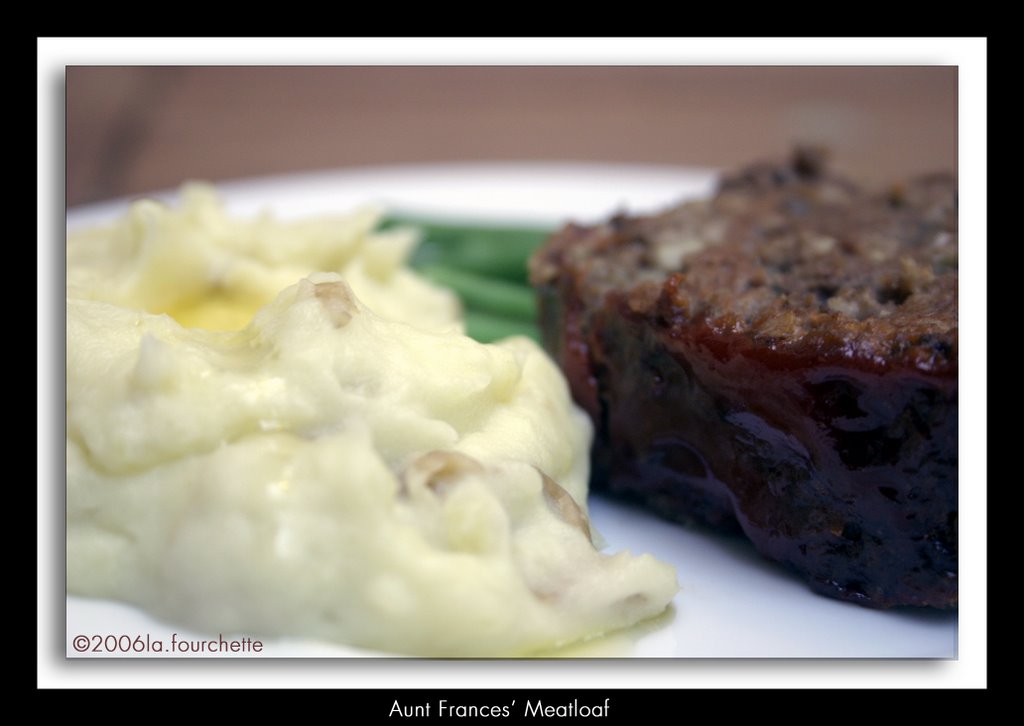
Although my cravings for familiar foods from another life have dwindled, a few old standards still hold me in their grip. At dinner a few weeks ago with friends Nathalie and Wayne, Wayne had prepared meatloaf and mashed potatoes. I couldn’t have been more pleased about a menu had I been sitting down to a reservation at E Bulli! (Okay, okay...maybe that's an "apples and oranges" kind of thing...but I was pleased.) Simple and satisfying, and usually coming from some old family recipe (Wayne uses his mother’s recipe), meatloaf is recognized throughout the United States as a classic when it comes to “comfort food”.


Not long after this, another friend and I were surprised to discover that we were baking banana bread at about the same time (something not often seen in France). Our culinary discussion led to another discovery: we shared a love of meatloaf and mashed potatoes. She implored me to come over and cook it for her and the children one evening when her husband was traveling for his consulting business.

I was coming out of a cold and still feeling a bit funky around the edges. My new friend had been a single parent for a week due to an out-of-town-on-business husband who usually does the cooking (and this man can cook, I’m telling you!). Her daughter had just lost her first tooth. And her son, well...it was just another Friday night for an “almost” 11 year old. Comfort food seemed just the ticket for all of us.

Family style around the table, we piled up helpings of the meatloaf and mashed potato feast. Lost momentarily in a flash of events from decades past when this was served for dinner, I saw an 11 year old girl who had just had her braces tightened...and then two little girls sharing some private giggle as they waited for the meal to be brought to the table in the dim light of an early autumn evening...and then a flurry of sensations about when there had been a loss or an upset...somehow, meatloaf just made things "right" if they hadn’t been - and better if they were already chugging along.

I was bumped from my reverie as forks hit plates. The discussion turned to much more pertinent matters: Six year old Olivia's first tooth loss - and we were given all of the details of exactly how it had come to pass earlier in the day. I was also filled in on the tradition in France as to who it is that sneaks under the pillows of children in the dark of night to retrieve the tooth in exchange for a small offering of money: La Petite Souris! No Tooth Fairies for the French children. No, “souris”! It's a little mouse with magical powers who comes in for the tidbit of cheese left as an offering (and enticement, I suppose) and leaves some “scratch” (and apparently sometimes a note) for the effort.
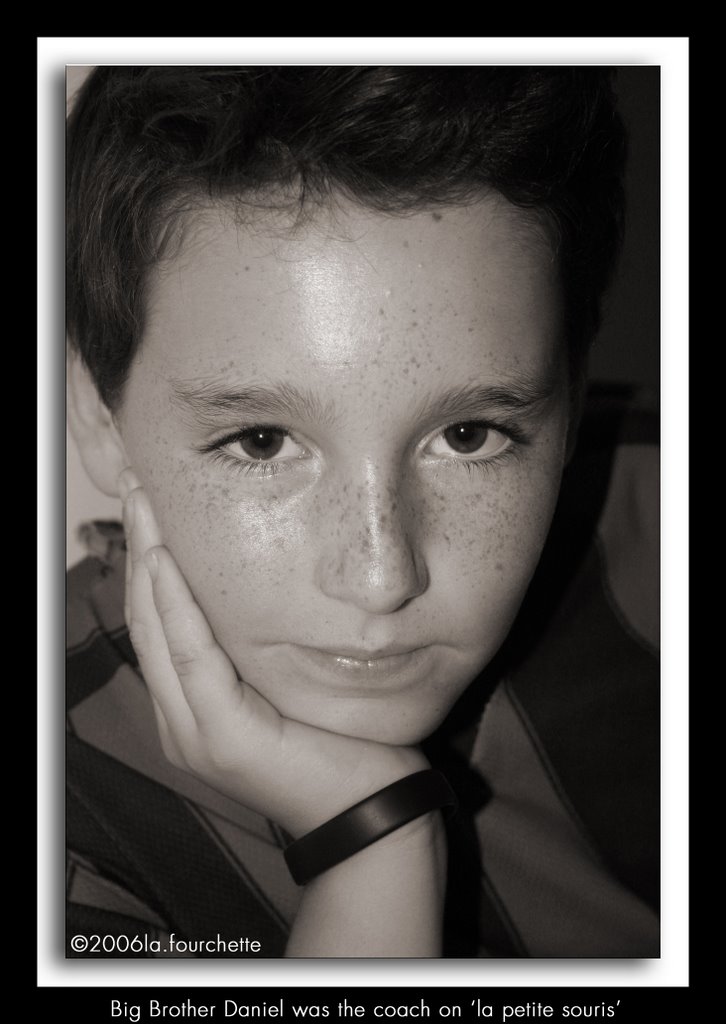
Big brother Daniel was the trusted coach for the auspicious visit as Olivia prepared her tooth in the pocket of La Petite Souris and tucked it under her pillow for retrieval. That ritual pretty much became the main event around which the world revolved for the evening.

In the midst of reflecting upon the more profound aspects of meatloaf and musing on its universal popularity among Americans, I was reminded of how unfeasible it is to be enveloped in one’s own thoughts or events (be they worthy of celebration or solace) when there are children around as their discoveries of details long forgotten by adults remain new and exciting and their demand to have everyone involved in their process is a “given” in child-centered families. It seems impossible not to share in the delicious delight of new wonders...in this case, the first visit from the “Little Tooth Mouse”!

Written on a small page from a quirky notepad that was given to me when I was in college, this recipe for meatloaf is from my aunt...or so we think...and thus the name: “Aunties Meatloaf”

Although my aunt doesn’t remember this as her recipe, my mother gave her older sister all the credit for my favorite comfort food...and that works for me.


(And you can see the value I give to meatloaf when you discover that it is affixed to the same page in my recipe collection notebook as a recipe for Sierra Steak Roast from a California winery and on the back of this page: Brandy Prime Rib and a recipe for New York Dijon Steak from the NY Times...starts to explain that E Bulli comment, doesn't it?! My meatloaf keeps good company.)

Bon Appétit!

L


Auntie’s Meatloaf

Pre-heat oven 350º

1 cup milk

1 egg

1 cup oatmeal

1 teaspoon salt

1/2 teaspoon pepper

1 teaspoon mustard

1 small onion, finely chopped

1 clove garlic, minced

1 tablespoon finely chopped fresh rosemary

1 lb. ground beef

catsup for topping

In a medium mixing bowl, mix together first 9 ingredients. Let sit for 5 minutes to absorb. Add ground beef and mix well. Put into greased loaf pan and bake for 1 hour. Top with catsup for another 15 minutes. Allow to cool a bit. Slice and serve.

Serves 6 to 8

Saturday, October 21, 2006

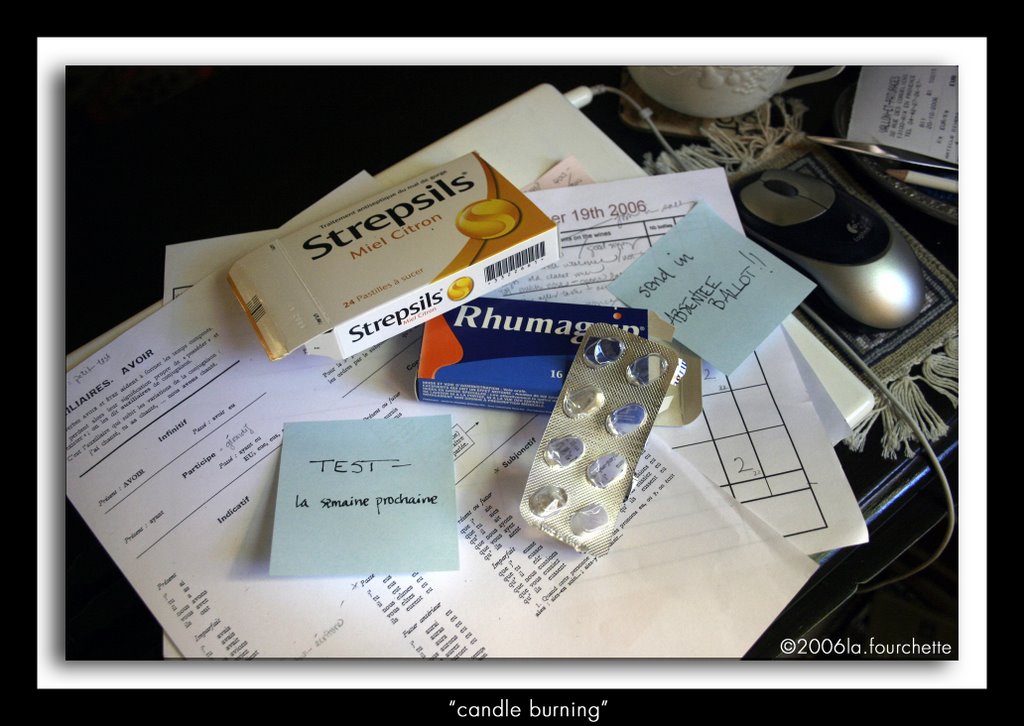
Burning the Candle at Both Ends


I have a tendency to do this, yes. Growing up, I would have heard this warning offered in that American English sing-song lilt...ended, for emphasis, by a sharp “Mmm-issy!” I am all too familiar with the unspoken clues as well. It started as just a little tickle in the back of my throat, and within 24 hours I found myself at the counter of my favorite pharmacie on Cours Mirabeau describing my symptoms in French to the kind looking woman behind the counter. I am not one to tough it out when I am sick. I like the sympathy of others. (It’s part of my charm!)

After a bit of back-and-forth as I tried to make myself understood, I decided to bring back the empty box of "magic remedy" that had been recommended the last time a tickle threatened to slow me down. With an “Aha!” of recognition that transcends all languages, she brought out the blue box that would restore my energy and knock my cold out...cold!

I am on the mend but have been slowed during the week while still adjusting to a full-time school schedule and commitments that seem now to have lit the other end of my candle.

Future posts will now be published on Friday to better fit my school schedule. Please drop in each Friday to see “what’s cookin’".

It’s been lovely to receive such a warm responses via comments and email to this initial dive into the world of blogs. Your comments are very welcome so keep them coming...and for those of you just peeking: Be Brave! I'd love to hear from you. It’s always nice to know there are people out there at the other end of my keyboard.

See you next week. In the meantime, you may want to stop in at my photography site for a visual tour of Provence and a bit of portraiture. This will be changing with additions and shifts, so tuck it into your favorites folder and visit as you wish.

À votre santé (and mine!)

L

Thursday, October 12, 2006

Ancient Roman Ruins with Newlyweds

No, no, no...that is not the recipe for this week, my friends. But it would seem that I have recently been living a real-life version of The Newlywed Game. For the second time in a handful of weeks, I found myself in the company of another newly paired ensemble. Spending just a squeak over a week in Aix at an apartment offered to them by a mutual friend of ours, they landed into the sunshine of our lovely region from the damp and cooler climes of London. It was clear to me upon meeting them that they were looking forward with great enthusiasm to spending their “lune de miel” – or honeymoon – in Aix en Provence and exploring as much as they could in their first trip to France. Since the aforementioned “apartment” of our mutual friend is just around the corner from me, I had offered to be a built-in tour guide,
translator and "Welcome Wagon". I stepped into the role of “big sister” with pleasure. (Although, in a realization that was ever so humbling: I am old enough to be mother to either of them!) They were quite charming – together and individually.

It was delightful to watch their responses as they discovered the nooks and crannies of Provence. Seeing familiar places and things through their eyes reminded me of what it was like to feel my heart tugged for the first time by this place.

So it was with delightful anticipation that I shared with them one of my favorite “mini-tours” of a nearby area: St. Rémy de Provence. Our newlyweds were definitely up for the adventure and the drive from Aix to St. Rémy on this Saturday morning was just cool enough to hint that autumn is really on its way, but splashed with enough golden sunshine to remind me how special it is to be in this land that seduced countless artists and soulful dreamers for centuries.

Taking a left turn just upon approaching the ancient Roman ruins of Glanum, we passed through the grounds of the asylum in which Van Gogh spent the final year of his life. Following the road past the olive groves, we arrived at our first destination: Le Mas de la Pyramide.


Le Mas de la Pyramide is an ancient Provençal farm with a troglodyte dwelling built into the side of a mountain that has served as the farmhouse for the estate for centuries. Originally, the farm was as an ancient Roman quarry, from which the stones were cut and carried to construct the nearby Roman structures in Glanum and on to what is now Arles and Avignon and some of the other surrounding towns and villages.

Cutting into the stone in such a way as to leave a 20-meter high limestone monolith in the middle of the field, the quarrymen called this “La Pyramide”. It was left as a way of measuring the depth and breadth of stone that had been excavated from the quarry. Standing in the field, I could just imagine the activity that had passed over this ground in the centuries that had come before. The ancient well, mid-way between the farmhouse and the edge of the quarry, must have served workers and dwellers alike. Today, the last remaining heir of the family who has owned this farm and cave-like dwelling for generations and generations (it is rumored that there is a document signed by Louis XIV in a drawer in the dining room), “Lolo”, as he is affectionately called, manages the estate and its agricultural museum. He also offers an extraordinary slice of “the real Provence” as he whips up a luncheon daily for visitors. An important local personality, he is a force to be reckoned with. At 80+ years young, he is a gracious host, chef, and, if he’s had a bit of wine with lunch (and likes the crowd), he may even break into an operatic selection for a bit of entertainment as the afternoon wanes.

I often take guests here for the experience as it is one of those “typically Provençal” kinds of things that are not easy to come by when you are visiting just around the edges with limited time.

Intrigued by the short walk down a narrow wooded path, our couple caught their collective breath (I suppose that breath really is rather “collective” in those early days of marriage!) as the path opened into a brilliant field of cherry trees and lavender to the left. A few steps further brought into view the troglodyte farmhouse under a canopy of ancient leafy trees shading solid stone tables on the terrace. Indeed, no matter how many times I have visited this spot, I experience a sense of wonder at stepping into a bygone time. Nothing fancy, this. And perhaps that is part of the magic. From the potato chips to accompany the aperitifs to the cartoon glasses used for wine and water at the lunch tables, the simplicity of the presentation allows one to really take in the “gestalt” of the experience. And on this lovely afternoon, we all took a metaphorical “dive into the deep end” of Provence.


After aperitifs of our local pastis and wandering around the ancient Roman quarry and farmhouse, we sat down at a table, gently warmed by the mid-day sunshine, which danced off the cave wall that curved around us, to share a rustic provençal aïoli. A garlicky mayonnaise served with salt cod, steamed vegetables and hard-boiled eggs, this was special fare for the occasion. (Monsieur Mauron often pulls out platters of roasted lamb, accompanied by ratatouille or provençal white beans and an herbed or olive-filled omelet as the main course.) But today we would be joining a small group of friends he was entertaining and he included us in the day’s meal.

Before we tucked into the aïoli, we were served caillette (a rustic pâté made of pork, greens and herbs) and slices of andouillette (which is not sausage – I would quickly learn!) as a first course.
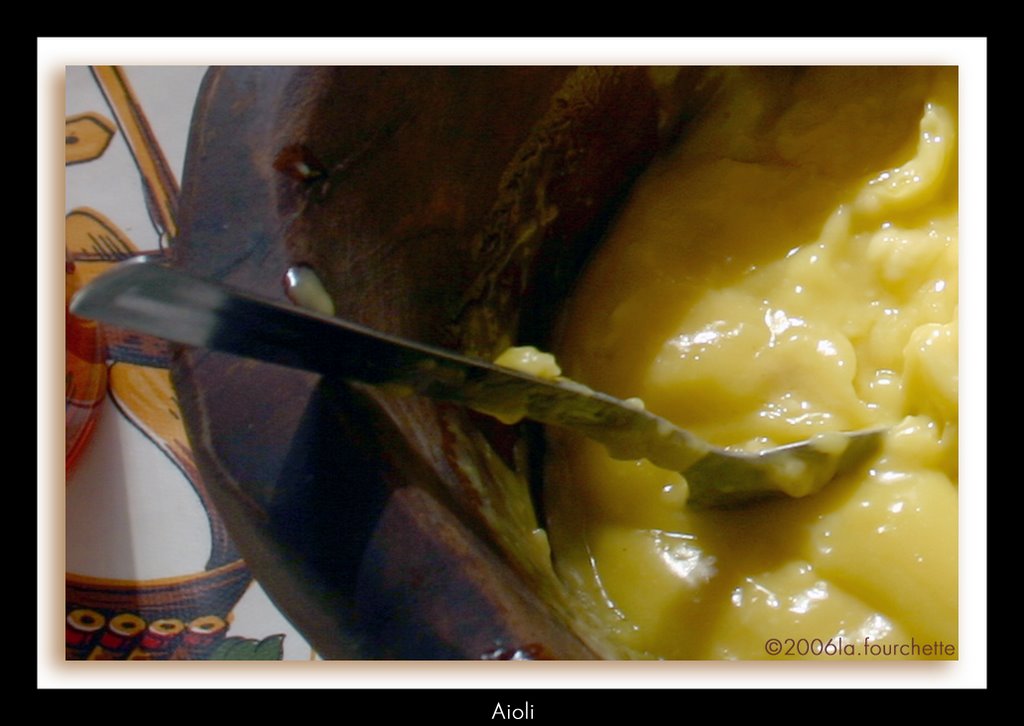
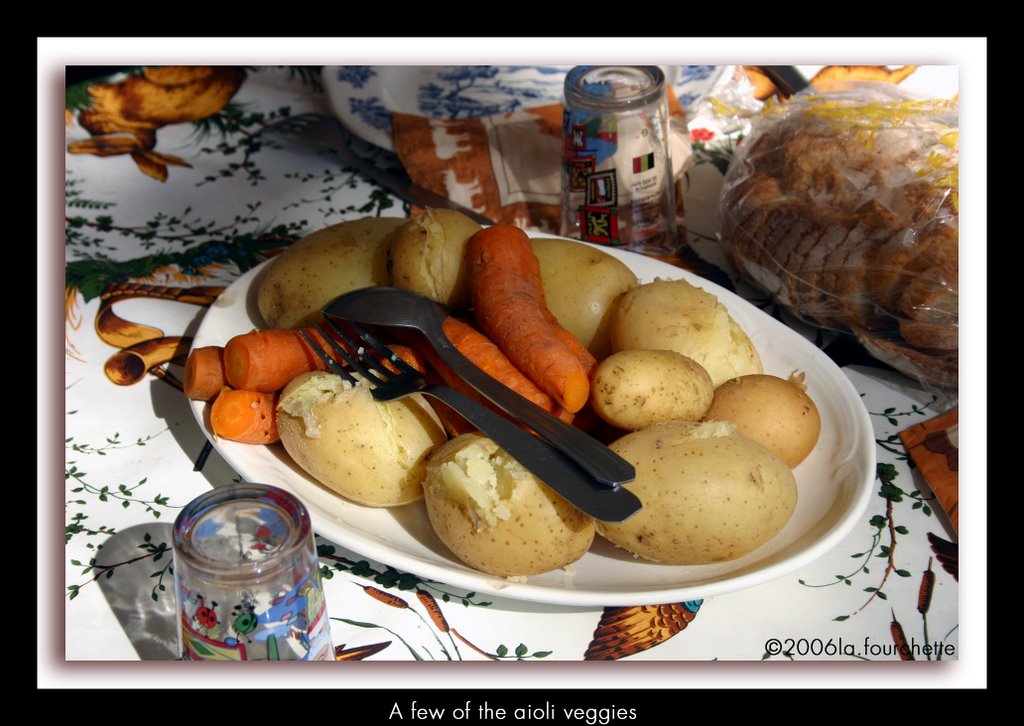
When the aïoli arrived, we plated up (family style) fragrant steamed potatoes, cauliflower, carrots and salt cod to dip into the creamy, garlicky sauce. A basket of hard-boiled eggs rounded out what is the standard combination for this dish, which is a typical representation of the bounty and style of cuisine that is Provence.

As usual, this was followed by a selection of cheeses and bread, topped off with a basket of ripe, juicy pears – a sure sign of autumn.

I was reminded over and over of my own delight and enchantment when I first visited La Pyramide as I watched the newlyweds explore the experience with all of their senses. And what a special pleasure to be seeing it through their eyes – it was all new, it was all a source of wonder to them.

As we wrapped up our day here and headed onto explore St. Rémy, we made the round of goodbyes to our lunch-mates, and for the first time in all of my trips to this special place, as I extended my hand to “Lolo” for a parting American hand-shake to express my thanks, he shook his head and promptly gave me the familiar “three kisses” (when I pulled back at two, he admonished me that in Provence it was always three...the appropriate number is still a mystery to me!) cheek to cheek to cheek. I must say, it’s really starting to feel like “home” around here.

We made the short trip from the edges of St. Rémy de Provence into the village to make a stop at O & Co. for a bit of olive oil and vinegar tasting and then on to Joel Durand, chocolatier (see the link to the right) before heading back out on the road.


As we took our seats at the tasting counter at O & Co., our charming tasting guide (who had been speaking French up to this point) clapped her hands together as she reviewed the line up of olive oils and began our tasting with a playful, “Okey-dokey!” in very clear American English. (Things like this still take me by surprise and I would later learn that her father is a restaurateur in Los Angeles...in fact, Santa Monica...not far from Cedars-Sinai Medical Center and she has spent a fair amount of time in my old stomping ground of Southern California!)


We tasted grassy to earthy olive oils (and a truffle oil that had my name all over it...and came home with me, in fact!) and rich fruity artisanal vinegars that were dessert all by themselves.


It was on to Joel Durand for a bit of a chocolate “fix” (and for me, to see if Monsieur Durand was anywhere to be seen...so handsome, that man!) Even when he is nowhere to be found, as was the case on this day, his extraordinary chocolates, lettered in gold corresponding to any one of a number of eclectic fillings, are a real treat. For example, E: “Earl Gray” with Earl Gray white tips, G: “Guyana” with nutmeg, cinnamon, sun-dried Bourbon vanilla and fresh lemon peel...you get the idea! Our Monsieur Durand is way more than just another pretty face! This man gets chocolate!

Back on the road to Aix after a day of adventure, we managed to squeeze in a couple of stops for a bit of wine-tasting to round out the trip and returned to town as the final rays of sunshine were washing the old tile roofs in shades of apricot.

A good time was had by all, I must say...and each of us carried from that experience something special. For me, it was the experience of being touched by the wonder that these two souls brought into their exploration. I would wish for them, at the beginning of their life together, (I suspect they are reading this because they want the recipe for Aioli!) that they continue to stay in touch with that sense of wonder as they grow together through the years. And I wish them many, many happy years...of wonder.


Felicitations, A. and B. - it was truly a pleasure.

(The following recipe for preparing the vegetables is adapted from Williams-Sonoma Savoring Provence. The recipe for the aioli is from Patricia Wells’ At Home in Provence.)

Bon Appétit!

L

Le Grand Aïoli

2lb. Salt cod fillet

STOCK
8 cups water
1 large carrot, peeled and sliced
1 leek, including green top, split lengthwise
1 yellow onion, studded with 2 cloves
2 cloves garlic
1 small celery stalk
1 small fennel stalk
bouquet garni

20 small boiling potatoes, preferably yellow fleshed
2 bunches baby carrots, peeled
8 small zucchini, trimmed and quartered lengthwise
1 lb. baby green beans, trimmed
1 large cauliflower, cut into florets
8-10 hard-boiled eggs, peeled

Begin preparing the salt cod at least 2 days in advance of serving. (To skip the salt cod prep, I have had this on separate occasions with a fresh white fish, one time poached, another grilled.) Place in a large bowl, add water to cover generously, cover, and refrigerate for at least 24 hours or preferably 48 hours, changing the water at least 5 times during that period.

The day of serving, make the stock: In a large saucepan, combine the water, carrot, leek, onion, garlic, and bouquet garni. Bring slowly to a boil over medium-high heat. Cover, reduce the heat to low, and simmer gently for 30 minutes. Remove from the heat, strain through a fine-mesh sieve, and return to the saucepan. Set aside to cool.

The potatoes, carrots, zucchini, green beans and cauliflower must be cooked separately in boiling salted water. Place in the salted water, bring to a boil, and cook, uncovered, just until tender, according to the following timings: potatoes, 20-25 minutes; carrots, about 12 minutes; zucchini, about 5 minutes; green beans, 4-5 minutes; and cauliflower, 3-4 minutes. Drain the vegetables. Peel the skins off the beets. Put all the vegetables on 1 or more platters and set aside.

Drain the salt cod (if using), transfer to a saucepan, add cold water to cover, and place over medium heat. Bring slowly to just under a boil and simmer, uncovered, until tender, 8-10 minutes. Drain and keep warm.

While you are cooking the cod, reheat all the vegetables, in the stock, heating only one type at a time. Each batch should take just 3-4 minutes.

Arrange the cod, vegetables and eggs in separate piles on large platters and serve immediately with the aioli*.

Serves 6-8

*Aïoli
6 plump, fresh cloves of garlic, peeled and minced
1/2 teaspoon of fine sea salt
2 large egg yolks, at room temperature
1 cup of extra-virgin olive oil

Pour boiling water into a large mortar to warm it; discard the water and dry the mortar. Place the garlic and salt in the mortar and mash together with a pestle to form as smooth a paste as possible. The fresher the garlic, the easier it will be to crush.

Add the egg yolks. Stir, pressing slowly and evenly with the pestle, always in the same direction, to thoroughly blend the garlic and yolks. Continue stirring and gradually add just a few drops of the oil. Whisk until thoroughly incorporated. Do not add too much oil in the beginning, or the mixture will not emulsify. As soon as the mixture begins to thicken, add the remaining oil in a slow, steady stream, whisking constantly. Taste for seasoning. Transfer to a bowl and serve immediately. The sauce can be refrigerated, well sealed, for up to 2 days. To serve, bring to room temperature and stir once again.

About 1 cup of sauce

Thursday, October 05, 2006

Changing Horses

"Don't change horses in the middle of the stream," is a cautionary proverb that warns of the danger of change...well, at least in mid-stream. Since moving to another country, my tolerance level for change has increased dramatically. Granted, this increased tolerance may well have its roots in survival, but it has made me a bit more bold and willing to take a few more risks. Recently, I have changed horses twice mid-stream. The results: well..."You win some, you lose some."

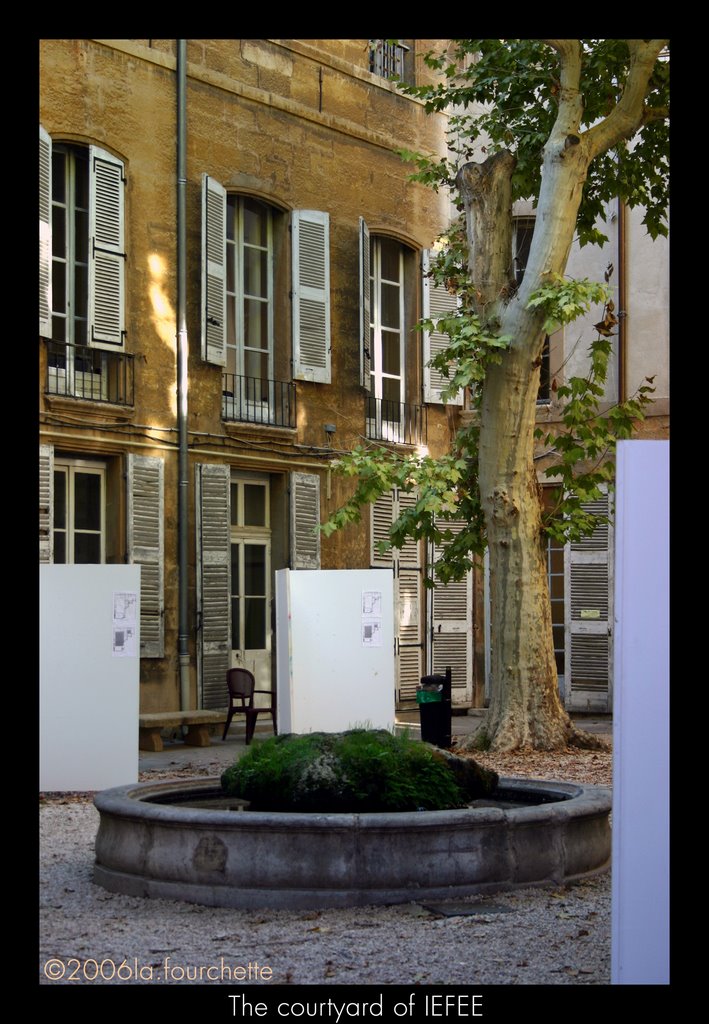
On rue de la Saporta we have Horse Number 1: This appears to be a successful change and I’m off and running! Changing study programs from a twice weekly, small-group model in a small, privately run enterprise to a full time university program has been one of my better decisions with regard to getting on board with my French. With a sharp new pencil in hand and fresh pages in the notebook, I took an enormous step to begin a two semester program of French study at the Institute pour l’Etudes Françaises pour Etudiants Etrangers (Institute for the Study of French for Foreign Students...which happens to be on rue de la Saporta). I am now very happily tucked into 22 hours of coursework per week (and all of the accompanying homework)and I couldn’t be more content! The level I tested into is very validating for my previous study efforts and to settle into another chapter of scholastic endeavor makes my "student soul" feel right at home. (There is a reason I have two rounds of graduate work followed by advanced training in my field of study under my belt. I simply really dig going to school!)

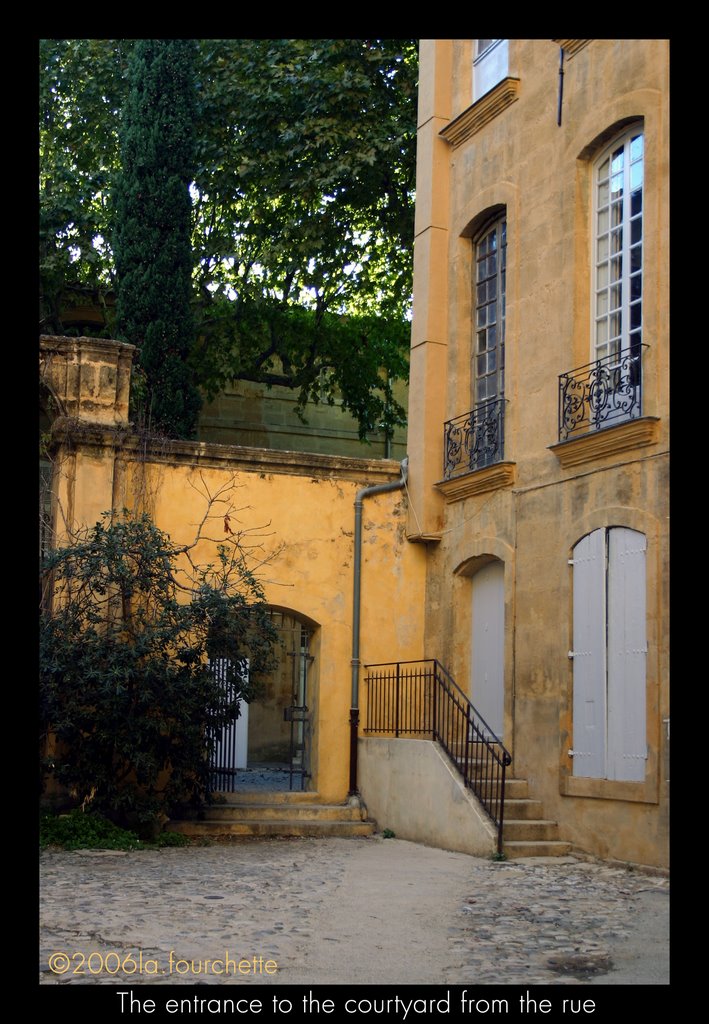
Needless to say, the setting is beautiful. Imagine passing through ancient courtyards and up and down staircases polished by centuries of footsteps each day. The "hotel particulier" in which the institute is located is just across from the main cathedral of Aix.

(In fact, this morning during class, the bells of the cathedral began to toll. The slow and mournful reverberations in deep tones entered our classroom in waves of sound followed, finally, by silence. A little less than an hour later, the ringing took on a rapid pace and sounded quite insistent...calling for attention as if to heed a message. The disruption was so profound that the professor had to stop his lesson to explain that when there is a funeral, the bells toll mournfully as the body is taken into the cathedral. He went on to explain that in the Catholic tradition it is believed that the soul rises during the service and when the body is taken out of the cathedral, the bells ring in a celebratory mode to signify the ascension. A little language...a little catechism...it all adds up to a little more bang for my euro than I had anticipated!)
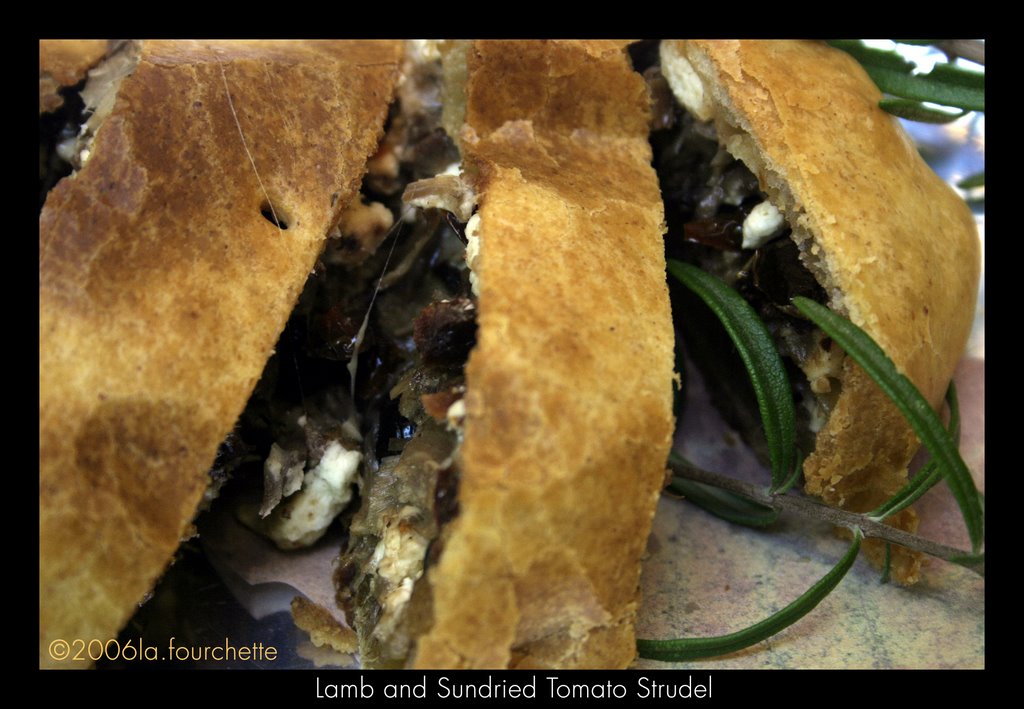
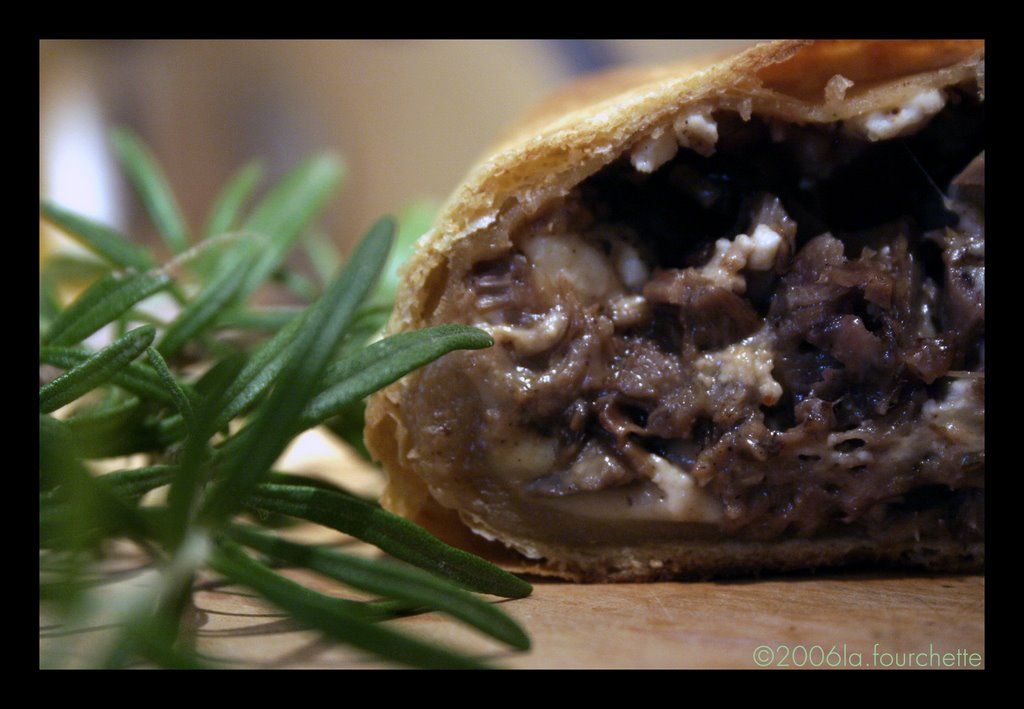
It would seem that Horse Number 1 has taken off at a gallop and I am finding my way into the rhythm of this new ride.

So even though the week’s schedule of classes did not leave much time for noodling around in the kitchen, I did manage to pop out a lovely savory strudel for some friends visiting from London. Another set of friends (who had called to extend wishes to "break a pencil" as I set off to my first day of school) joined us for aperitifs one evening on the candlelit courtyard.

(By the way, I am really into this concept of "aperitifs"! To have people in for just drinks and appetizers is so civilized! It affords me a way to entertain in my new small space in a very manageable fashion, while still giving me an opportunity to pull some pretty tasty stuff out of the kitchen to feed my friends. And what’s not to like about any and all opportunities for cracking open a bottle of champagne! Yes, this ritual of aperitifs really works for me.)

This particular gathering was the eve of my new study program...an event definitely worth celebrating! And so we did. The savory lamb strudel (remember the souri d’agneau? Save those leftovers!) was delicious. Warm and buttery bites of a flaky puff pastry hugging a mélange of complementary flavors...it was enjoyed right down to the last flake. But alas, in my haste to pull things together for the evening, and due to the lack of lovely light on these shorter early fall days, I did not take any photos.

This would be the place in the stream where Horse Number 2 canters in. Ehhhh...not so successful, this change.

A bit of a back story: I have grown quite fond of the rolls of pâte feuilletée that are available here for tarts and such. I have made this recipe many times with these lovely flaky pre-rolled wonders and am not likely to start producing my own puff pastry anytime soon. My clever idea to whip out another strudel with the additional filling would just fit into an afternoon between classes. There would be plenty of light for photos for La Fourchette as well as plenty of strudel to share with my immediate neighbors. It only required a quick stop at the supermarché for the "strudel wrapper". Easy, huh? As sometimes happens at the supermarché, there are “slim pickin’s” of certain items on delivery days. Such was the case with my favorite rolled tart dough, so I chose to hop on the horse that said "whole wheat" just below the familiar "pâte feuilletée" I have come to love. The whole wheat version was the only thing available. Now, in a manner I might compare to the amnesia experienced by any mother who gives birth more than once, I seem to have conveniently forgotten all of my previous attempts to work with whole wheat anything. Other than pouring milk on breakfast flakes (which I seem to remember doing successfully), I just can’t remember ever pulling anything of whole wheat out of the oven that looked or tasted all that satisfying.

And I have plenty of evidence to support this conclusion. Coming from a family that valued hand-made gifts for birthdays and holidays, I tried countless times to turn out little loaves of whole wheat bread for my father to accompany the gifts of his favorite spicy sausages and mustard. (The fact that the the word "countless" used here is all too true, one might wonder exactly why I would keep trying...and this is where, “To know me is to love me.” would come in as I can be a bit...okay, incredibly stubborn.) And just as many times as I tried my hand at whole wheat “bricks”, (had the old California missions been built with these things, there would be no need for restoration even a century later...maybe just a coat of paint now and then) my father received my failed efforts with a generous smile and the loving response of appreciation for such a thoughtful gift. This was definitely an act of grace, because he sure as hell couldn’t eat those little bombs of whole wheat! I finally (and thankfully, for him!) gave up.

Who'da thunk that a packaged roll of puff pastry would have yielded similar results to my little "bread bricks" of years gone by?! But when I pulled that lovely aromatic strudel number two out of the oven and cut into it, I did not discover the flaky perfection that had wrapped itself around the delicious mélange of lamb and cheese and mushrooms and sun dried tomatoes and olives a few nights before...no, not at all.


This time, the very well-baked exterior opened into a thin crust that cracked on the outside and didn't flake at all. In fact, the bottom layer had a not-quite-done doughy texture that just didn’t measure up to anything that has come before from similar efforts with this dish. And, as luck would have it, this was the model next in line for the "close up". This was to be the "star" of the photos that would go public or there would be no post this week. It only seems fair to let you in on the whole wheat "horse change" part of this story so that you are not dissuaded from trying what is actually a very tasty recipe and one that will please loved ones and guests alike. Try as I might to dress her up for the photo session with fresh herbs and lovely light, the evidence is right there in living color. (Ahhh, but that filling is really delicious!)

As for changing horses mid-stream...there will be others to come along, I’m sure. But let’s hope that I can recognize any horse coming along that has whole wheat on his breath.

This recipe makes two strudels, plenty for a lively group in for aperitifs for the evening. Pop open a bottle of champagne (a Blanc Noir - 100% Pinot, as suggested by Jean-Marc Espinasse) or try one of the other suggestions from this author of French-Wine-A-Day.
(Listed from very spicy to less spicy)
Cornas
Grès de Montpellier
Bandol
Pernand-Vergelesses
Meursault

Bon courage with this recipe – it’s worth the risk!

Bon Appetit!
L


LAMB AND DRIED-TOMATO STRUDEL
Adapted from Gourmet Magazine

2 puff pastry sheets (US) or 2 pâte à tarte feuilletée (France)

For filling:
1 1/2 cups boiling water
1/2 cup sundried tomatoes not packed in oil (about 2 ounces)
1/2 pound mushrooms
3/4 cup black brine-cured olives, pitted
1 tablespoon olive oil
1 pound ground lamb (or equivalent of leftover roasted or braised lamb)
1 teaspoon dried rosemary, crumbled
1 teaspoon dried basil, crumbled
1/2 teaspoon dried hot red pepper flakes
1 1/2 cups crumbled feta (about 8 ounces)
1/2 cup grated mozzarella (about 3 ounces)

About 5 tablespoons olive oil

Make filling:

In a small bowl pour boiling water over tomatoes and soak 5 minutes. Thinly slice mushrooms. Give the pitted olives a rough chop. Drain tomatoes well and thinly slice.

In a large heavy skillet heat oil over moderately high heat until hot but not smoking and sauté mushrooms with salt and pepper to taste, stirring, until liquid they give off has evaporated. With a slotted spoon transfer mushrooms to a large bowl. If using ground lamb, Add to skillet and cook, stirring and breaking up any lumps, until no longer pink. Transfer lamb with slotted spoon to bowl with mushrooms and discard fat. If using leftover roasted lamb, shred or give it a course chop and add to the mushrooms. Stir tomatoes, olives, rosemary, basil, and red pepper flakes into lamb mixture and cool 10 minutes. Stir in feta, mozzarella, and salt and pepper to taste. (Watch the salt as the brine-cured olives can be salty!)

Preheat oven to 425°F and lightly grease a large shallow baking pan.

Roll out one sheet of puff pastry or pâte feuilletée (gently stretched into a rectangle) and spread half of filling in a 3-inch-wide strip, mounding it, 4 inches above the near long side, leaving a 2-inch border at each end. Lift bottom 4 inches of pastry over filling, folding in ends, and tightly roll up strudel. Carefully transfer strudel, seam side down, to baking pan and lightly brush with oil. Make another strudel with remaining ingredients in same manner.

Bake strudels in middle of oven 20-25 minutes, or until golden. Cool strudels to warm in pan on a rack.

Cut into 1-inch slices with a serrated knife and serve slices warm.

Serves 6 to 8
Gourmet

You migh also like:

Related Posts Plugin for WordPress, Blogger...